
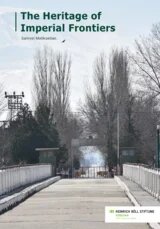
The Heritage of Imperial Frontiers

Tracing the Armenian–Turkish border from imperial rivalries to the Cold War and its closure in 1993, this article shows how shifting frontiers transformed landscapes, populations, and everyday life. Through the intertwined histories of Akhurik and Margara, two villages divided by rivers and barbed wire, it reveals how borders functioned not only as lines of separation but also as spaces of contact, memory, and contradiction. Drawing on local oral histories, the article explores how migration, informal exchange, and Soviet-era silences shaped perceptions of “the other side.” It examines how border infrastructure, such as railways, bridges, and checkpoints, became instruments of power, survival, and hope.
The Content of the article is the sole responsibility of the author and can in no way be taken to reflect the views of the Heinrich Boell Foundation Tbilisi Office - South Caucasus Region.
Product details
Table of contents
Introduction - 3
Migration Between the Empires: The Border As a Segregation Line - 5
The Russian Empire and the Deepening of Segregation - 6
The Soviet Era - 10
Akhurik and Margara: Examples of Two Border Villages - 12
Akhurik: A Sliver of the Kars Province in Armenia - 13
Margara: Life At the Closed Bridge - 18